


Tips for Buying Used Vinyl Online: A 2026 Guide
Table of Contents
- Where to Buy Used Vinyl Online
- Understanding Used Vinyl Record Grading Systems
- How to Assess Record Condition Before You Buy
- Questions to Ask When Buying Used Vinyl
- How to Identify Vinyl Record Pressings and Avoid Mislisted Records
- How to Spot Counterfeit Vinyl Records
- Pricing, Shipping, and Buyer Protection
- Frequently Asked Questions
Last Updated: October 15, 2026
Where to Buy Used Vinyl Online
The key is knowing where to look, what to ask, and how to verify what you're buying.
The major marketplaces for buying used vinyl online include:
- Discogs, The largest vinyl database and marketplace. Millions of records listed by collectors and sellers worldwide. Strong buyer protection and detailed pressing information.
- eBay, Traditional auction and fixed-price listings. Wide inventory but highly variable seller quality and grading standards.
- Reverb, Originally for instruments, now expanding vinyl selection. Strong seller reputation system and buyer protection.
- Etsy, Specialty sellers and independent record stores. Often higher prices but curated selections.
- Specialist record store websites, Direct from independent shops. Usually higher prices but better condition control and expertise.
Each marketplace has different seller standards, return policies, and grading conventions. Discogs attracts serious collectors who understand pressing variations; eBay attracts casual sellers who may not know a first pressing from a reissue.
Compare the same album across platforms to see who prices fairly.
Understanding Used Vinyl Record Grading Systems
Vinyl grading tells you what shape a record is actually in, but marketplaces use different terminology and sellers interpret grades differently.
A record graded "Very Good Plus" on Discogs might be "VG+" on eBay or "Good" on a personal seller's site, so learn the scale before you commit money.
Grading Scales Across Marketplaces
The Goldmine grading standard is the industry baseline, but not every seller follows it strictly.
| Grade | Goldmine Abbreviation | What It Means | Typical Price Impact |
|---|---|---|---|
| Mint | M | Unplayed, perfect condition | 2-3x higher than VG+ |
| Near Mint | NM | Minimal signs of handling | 1.5-2x higher than VG+ |
| Very Good Plus | VG+ | Light wear, plays perfectly | Baseline price |
| Very Good | VG | Noticeable wear, minor surface noise | 20-40% discount |
| Good Plus | G+ | Heavy wear, audible scratches | 40-60% discount |
| Good | G | Significant damage, plays with noise | 60-80% discount |
| Fair | F | Damaged but playable | 80%+ discount |
| Poor | P | Barely playable | Often not worth buying |
Discogs uses this exact scale. eBay sellers often use looser language like "Excellent" or "Good" without plus modifiers, and specialist shops may use their own systems.
Always check which grading system a seller uses, an "Excellent" record on eBay might actually be VG+ on the Goldmine scale.
What Each Grade Actually Means for Playback
Here's what matters: will the record sound good when you play it?
Mint to Near Mint records play without surface noise. These are rare and expensive.
Very Good Plus records sound nearly perfect, with maybe a tiny pop during quiet passages.
Very Good records have noticeable surface noise between tracks, but the music plays clearly.
Good Plus to Good records have audible scratches and consistent surface noise.
Fair or Poor records are rarely worth buying unless extremely rare.
How to Assess Record Condition Before You Buy
Before committing money, inspect the record closely using the seller's photos and description. Most sellers won't accept returns just because you don't like how it sounds.
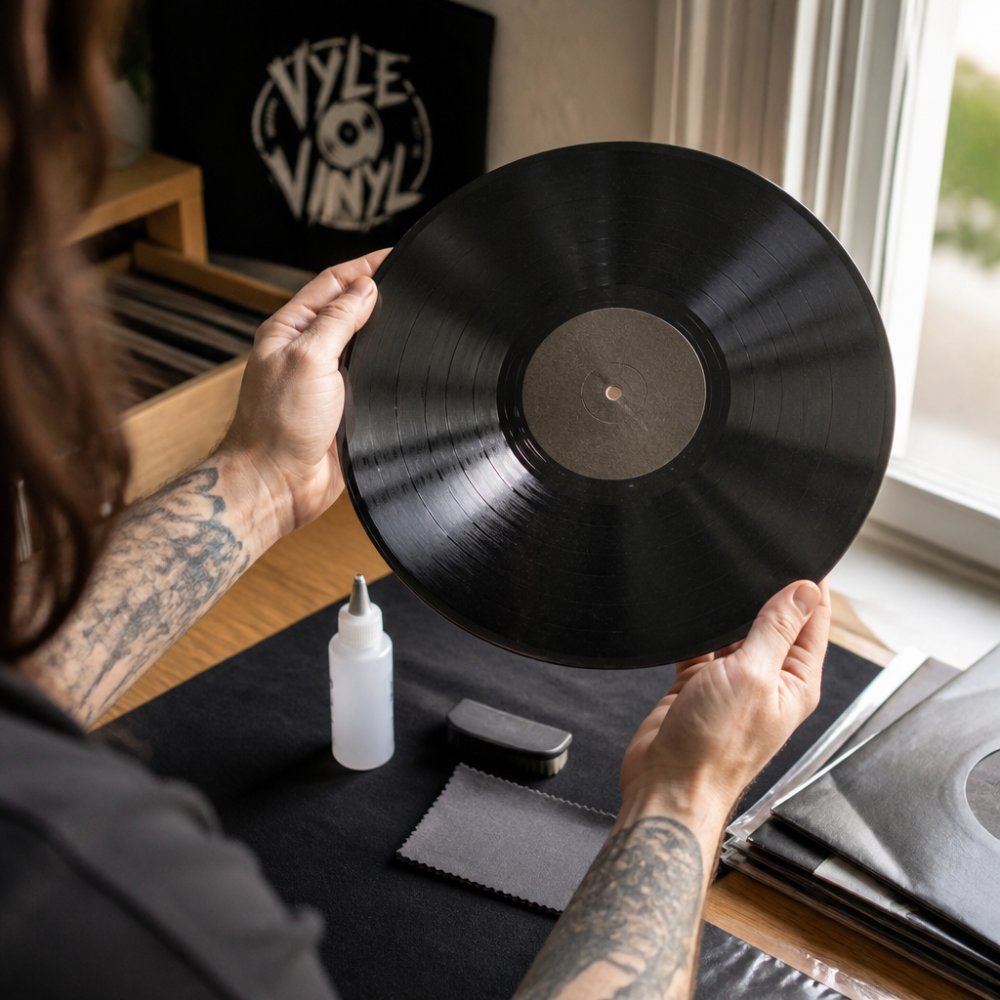
A good seller provides multiple high-quality shots of both sides under bright lighting. If photos are blurry, dark, or limited, ask for more, a seller who won't provide clear photos is hiding something.
Look for these specific issues:
- Visible scratches, Light scratches that run across the grooves catch light and appear as thin lines. Deep scratches look dark and gouged.
- Cloudiness or haze, A dull, milky appearance means the record has been played heavily or stored poorly. This causes surface noise.
- Dust or debris, Particles embedded in the grooves can't be cleaned out and cause pops and crackles.
- Label condition, Peeling, staining, or writing on the label doesn't affect sound, but it affects resale value.
- Sleeve condition, Torn, stained, or water-damaged sleeves indicate poor storage. If the sleeve was stored badly, the record probably was too.
Surface Scratches, Scuffs, and Groove Wear
Not all scratches are equal. A light scratch that doesn't penetrate the groove plays fine; a deep scratch creates an audible skip or pop every time the needle passes.
Ask the seller: "Are there any deep scratches that affect playback, or just light surface marks?" If they claim "perfect condition" but photos show obvious wear, move on.
Groove wear is different: after hundreds of plays, groove walls smooth out, causing subtle loss of detail and increased surface noise. It's almost impossible to see in photos.
Warping and Physical Defects
Warping is a deal-breaker: a warped record won't sit flat, and the needle jumps in and out of the groove. Some warping shows in photos if the record is tilted under bright light, but most isn't visible until you play it.
Ask the seller directly: "Is the record warped or does it sit flat?" If they don't answer, assume it might be warped.
Other physical defects to watch for:
- Cracks or breaks, Usually at the center hole or edges. A cracked record can still play if the crack doesn't go through the grooves, but it's a risk.
- Stickers or tape residue, difficult to remove without damaging the record.
- Water damage, staining, swelling, or warping from moisture. Often causes mold or mildew, which smells bad and spreads.
If the seller minimizes or ignores any of these, don't buy.
Questions to Ask When Buying Used Vinyl
Before committing to a purchase, ask the seller specific questions. Their answers reveal their knowledge and honesty.
Ask about condition: "You list this as VG+.
Ask about playback: "Have you played this record recently?
Ask about the pressing: "Do you know which pressing this is?
Ask about the sleeve: "What's the condition of the jacket?
Ask about shipping: "How do you pack vinyl?
Ask about storage: "How was this record stored?
A seller who answers thoroughly is worth buying from again; vague or defensive answers are a red flag.
How to Identify Vinyl Record Pressings and Avoid Mislisted Records
One of the biggest traps in buying used vinyl is paying for a first pressing when you're actually getting a later reissue. A first pressing of a classic album can be worth 10 times more.
Genesis - Invisible Touch (LP) →
Sellers sometimes mislabel pressings by accident, and some do it on purpose to inflate prices. Either way, verify what you're actually buying.
Reading Catalog Numbers and Release Information
Every vinyl record has identifying information printed on the label and in the run-out groove (the area between the last track and the label).
Label information:
- Catalog number (e.g., "SR-61001")
- Country of origin (e.g., "Made in USA" or "Made in Japan")
- Release year (sometimes printed, sometimes inferred from the catalog number)
- Publisher and distributor information
Run-out groove information:
- Matrix numbers (stamped or etched into the vinyl)
- Pressing plant codes
- Sometimes the year or month of pressing
These details tell you which pressing you have.
Reading run-out grooves requires examining the record in person or getting high-quality close-up photos from the seller, which many don't provide.
Ask the seller: "Can you provide a close-up photo of the run-out groove and label?" If they can't or won't, you're taking a risk.
Verifying Pressing Details Against Discogs
Discogs is the vinyl encyclopedia, documenting every pressing with matrix numbers, label variations, and release details.
Once you have the catalog number and pressing info, search Discogs for the album, check the "Versions" tab, and match the seller's details against the listing.
For example, if a seller claims a 1970 first pressing of a classic rock album, you should see:
- The correct catalog number
- "Made in USA" or the correct country
- Matrix numbers matching the Discogs listing
- The correct label design (colors, text, layout)
If the seller's details don't match the Discogs listing, they've either mislabeled the record or don't know what they have. Ask for clarification before buying.
Some sellers are honest but unknowledgeable, listing a third pressing as a "first pressing." Others deliberately mislabel to get higher prices.
How to Spot Counterfeit Vinyl Records
Counterfeit vinyl exists, especially for classic albums and rare pressings.
Spotting counterfeits requires examining several details:
Pressing quality: Counterfeits often have shallow grooves, thin or brittle vinyl, or visible defects like bubbles or warping. Original major-label pressings are consistently high-quality.
Label printing: Counterfeit labels often have off colors, blurry text, or misaligned printing.
Price: A rare record priced significantly lower than other listings might be counterfeit, since counterfeits cost less to produce.
The best defense: buy from reputable sellers with strong feedback.
Discogs has a counterfeit reporting system, if you receive a record you believe is counterfeit, report it to warn other buyers.
Pricing, Shipping, and Buyer Protection
The final piece: paying a fair price and making sure your record arrives safely.
Calculating Total Cost and Fair Value
Compare total cost across sellers, not just the listed price. A record at $35 with $8 shipping is cheaper than one at $32 with $12 shipping.
To find fair value, check what the same pressing sells for across marketplaces using Discogs' "Marketplace" tab.
Factor in condition: a VG+ copy should cost less than NM, and a later pressing less than a first pressing. If pricing doesn't match, move on.
Packaging, Shipping Risks, and Return Policies
Vinyl shipped in a regular cardboard box often arrives warped or damaged. A good seller uses:
- Record mailers, boxes with cardboard stiffeners
- Bubble wrap or foam padding, to cushion the record
- Tracking and insurance, to verify delivery and claim damage
Ask how the seller packs records. "Regular box" is a red flag, records shipped this way frequently arrive damaged.
Check the return policy before buying.
Shipping insurance is worth the extra cost for expensive records.
Buying used vinyl online gives you access to rare pressings and underground releases.
Start with Discogs for research and Reverb for buyer protection.
When you find records you want, take your time, the collectors who build the best collections verify first and buy second.
Looking to build your collection with rare horror, punk, and heavy metal pressings? Discogs' vinyl grading guide provides the authoritative standard for condition assessment. For verification of pressing details, Discogs Release Database lets you cross-reference matrix numbers and label variations. And for protecting yourself during shipping, the Reverb Buyer Protection policy outlines what's covered if your record arrives damaged.
Frequently Asked Questions
What does VG+ mean when buying used vinyl?
VG+ (Very Good Plus) is a used vinyl record grading standard indicating the record shows minimal signs of play. The vinyl has light surface marks that don't affect sound quality, and the sleeve shows minor wear. On most marketplaces, VG+ records play cleanly with no audible pops or skips. This grade sits between VG (visible wear) and NM (Near Mint, barely played). Always cross-reference the seller's photos and description to confirm the grade matches the actual condition, since grading varies slightly across marketplaces.
How do I know if a vinyl record listing is legitimate?
Check four key signals: (1) Detailed product photos showing both sides, the sleeve, and any defects in clear lighting; (2) A specific catalog number and pressing information matching Discogs records; (3) Honest seller descriptions that mention flaws rather than hiding them; (4) Seller feedback and ratings from verified buyers. Be skeptical of listings with vague descriptions, stock photos, or prices far below fair value. Ask the seller for the exact catalog number and release year before committing. Legitimate sellers welcome detailed questions and provide high-resolution images.
What should I do if a used vinyl record arrives in worse condition than described?
Document the damage immediately with photos and video, then contact the seller within the return window (typically 14-30 days depending on the marketplace). Most platforms offer buyer protection: you can request a refund, partial refund, or replacement. Include clear evidence showing the discrepancy between the listing photos/grade and what arrived. Keep the record and packaging intact for the seller's inspection if required. If the seller doesn't respond, escalate to the marketplace's dispute resolution team. Always insure shipments for high-value records to protect yourself against carrier damage.
How can I avoid counterfeit or misidentified vinyl records?
Verify pressing details using Discogs: match the catalog number, label design, and release year to confirmed pressings. Counterfeit records often have blurry or incorrect label text, wrong spine codes, or mismatched jacket colors. Check the vinyl itself under light for quality inconsistencies or unusual weight. Buy from established sellers with strong feedback rather than unknown accounts offering suspiciously cheap copies of rare albums. Ask sellers to confirm the exact pressing variant before purchase. For high-value records, request detailed close-ups of the label, center hole, and jacket back.