


How to Grade Horror Vinyl Condition: A Collector's Guide
Table of Contents
- Why Grading Horror Vinyl Matters to Collectors
- Understanding the Goldmine Record Grading Standards
- Identifying Common Vinyl Surface Defects
- Step-by-Step Visual Inspection Process
- Audio-Based Grading vs. Visual Inspection
- Common Grading Pitfalls Beginners Make
- Grading Special Vinyl: Picture Discs and Colored Pressings
- Frequently Asked Questions
Last Updated: September 28, 2026
Why Grading Horror Vinyl Matters to Collectors
Knowing how to grade horror vinyl condition separates serious collectors from casual buyers. When you're hunting for rare pressings, whether it's a first-edition horror soundtrack or a cult classic from the 70s, condition determines both value and listening experience. A record graded accurately tells you exactly what you're getting before it arrives at your door.

Proper grading eliminates guesswork. A seller claims "very good" condition, but the record skips during playback, that's the gap between expectation and reality.
The Goldmine Record Grading Standard is the industry's shared language. Understanding it means you can shop across platforms, compare listings fairly, and assess whether a horror soundtrack is worth the investment.
Understanding the Goldmine Record Grading Standards
The Goldmine Standard defines six grades, from Mint down to Poor. Each grade has specific criteria for surface noise, scratches, and audio defects. Collectors worldwide use this framework because it's objective and repeatable.
The standard separates visual condition from audio performance. A record can look clean but sound rough, or vice versa. Both matter, which is why the grade accounts for both.
| Grade | Surface Noise | Scratches | Audio Quality | Resale Value |
|---|---|---|---|---|
| Mint (M) | None | None visible | Perfect | 100% |
| Near Mint (NM) | Minimal | Barely visible | Nearly perfect | 85-95% |
| Very Good Plus (VG+) | Light | Light scratches | Minor pops | 50-70% |
| Very Good (VG) | Noticeable | Visible scratches | Audible defects | 30-50% |
| Good (G+/G) | Heavy | Deep scratches | Frequent skipping | 10-30% |
| Fair/Poor (F/P) | Severe | Significant damage | Major issues | Under 10% |
Mint (M) and Near Mint (NM) Grades
Mint condition means the record was never played, the cover is pristine, and there's zero surface noise. In reality, true Mint horror vinyl is rare, records pressed decades ago have usually been handled or examined by previous owners.
Near Mint is what serious collectors hunt for. The record has been played minimally, with hairline scratches that don't affect playback. The sleeve shows light shelf wear but no seam splits or ring wear.
The jump in price between NM and VG+ is steep because the listening experience is genuinely different, you're paying for silence between tracks.
Very Good Plus (VG+) and Very Good (VG) Explained
Very Good Plus is the sweet spot for budget-conscious collectors. Light scratches are visible under direct light but don't catch your fingernail. Surface noise is minimal, with occasional pops that don't dominate playback.
The cover shows obvious shelf wear, with possible spine creases and inner sleeve seam splits.
Very Good shows obvious condition issues. Scratches are visible without special lighting. Playback reveals consistent surface noise and occasional pops, but the record plays through without skipping. Collectors often buy VG copies to play, reserving better copies for the collection.
Good (G+/G) and Fair (F) Conditions
Good Plus and Good grades mean significant wear: deep scratches, constant surface noise, and possible skipping. The cover is heavily worn with stains or seam splits.
At this grade, you're buying for display or as a curiosity, not serious listening.
Fair condition means heavy scratches, warping, and frequent skipping. Fair records are rarely worth buying unless the pressing is extremely rare.
Identifying Common Vinyl Surface Defects
Understanding wear patterns prevents overpaying and helps you spot genuinely damaged records.
Scratches, Scuffs, and Handling Marks
Hairline scratches are thin, light marks that appear under bright light but don't catch your fingernail and rarely affect playback.
Deep scratches run visibly across the surface, catch your fingernail, and cause audible clicks or pops during playback.
Scuffs are broader, lighter marks from handling that don't usually affect sound but make the record look worn.
Handling marks are fingerprints, dust, or smudges that wipe away. Clean the record first, then assess what remains.
Groove Wear, Ring Wear, and Pressing Quality Issues
Groove wear happens when the groove walls become shiny and flattened from repeated play. Severe groove wear causes dynamic range loss and directly affects audio quality.
Ring wear is a circular mark on the sleeve from the record sitting against it for years. It's purely cosmetic and so common on older horror soundtracks that collectors expect it at VG and lower grades.
Pressing quality issues vary by era and label. Some pressings have inherent surface noise or warping from factory storage. They still lower the grade because they affect the listening experience.
Warping, Skipping, and Audio Defects
Warping is when the record is no longer flat. Warped records skip and cause pitch variations, degrading the grade even if slight.
Skipping happens when the stylus jumps out of the groove. It's caused by deep scratches, warping, or severe groove wear. A record that skips regularly is Fair or Poor grade, regardless of how it looks.
Pops and crackles are clicks during playback from dust or light scratches. A few pops per side is VG+; constant pops is VG or lower.
Hiss is background noise from the pressing or groove wear. It's not fixable but definitely affects the grade.
Step-by-Step Visual Inspection Process
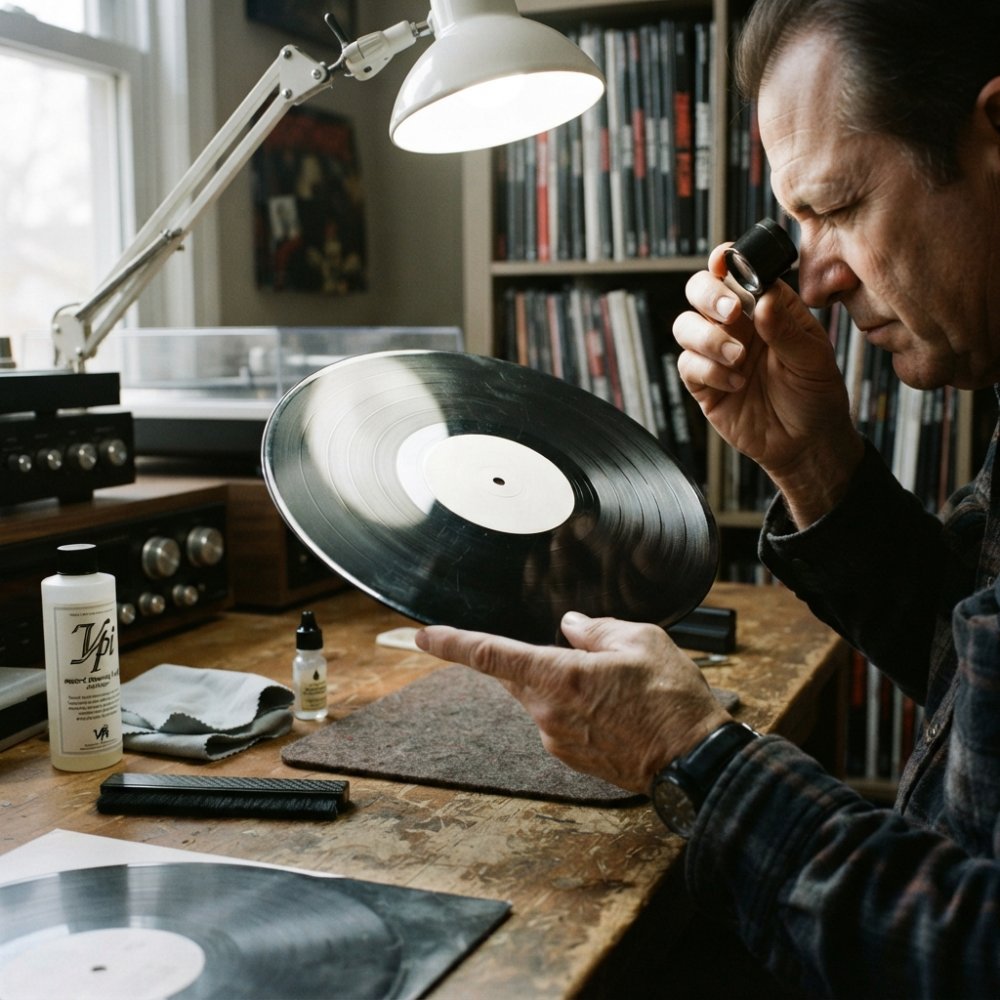
Grading requires the right setup and systematic approach. Rush and you'll miss defects; take your time and you'll grade accurately.
Setting Up Your Inspection Space
Lighting is everything. Use a bright, focused light source angled low across the record surface so scratches cast shadows and become visible.
Clean your workspace. Dust particles confuse inspection. Wipe the record with a lint-free cloth and work on a clean mat to prevent dust transfer.
Get your hands clean. Wash before handling records you're grading, or wear cotton gloves if handling many records.
Examining the Record Under Light
Start with the label side under light, noting scratches and scuffs. Then flip and repeat on the grooved side, which matters most for audio quality.
Look for these defects in order:
- Hairline scratches (light, thin marks)
- Deep scratches (visible grooves in the surface)
- Scuffs (broader, lighter marks)
- Warping (tilt the record and see if it's flat)
Spin the record slowly under light and watch for consistent patterns.
Checking the Sleeve and Inner Materials
The sleeve condition is graded separately but influences the overall grade. Look for seam splits, spine damage, stains, and cut-out holes.
Audio-Based Grading vs. Visual Inspection
Most graders make mistakes by grading what they see, not what they hear. A record can look pristine but sound rough. You need to listen to grade accurately.
Common Grading Pitfalls Beginners Make
New collectors consistently make the same mistakes. Knowing them helps you avoid them.
Grading Special Vinyl: Picture Discs and Colored Pressings
Picture discs and colored vinyl have different grading considerations. They're more fragile and show defects differently.
Frequently Asked Questions
How do you grade vinyl records for condition using the Goldmine grading standards?
The Goldmine grading scale ranks vinyl from Mint (M) to Poor (P) based on visual and audio quality. Start with visual inspection under bright light, looking for scratches, groove wear, and label condition. Then assess audio playback for surface noise, pops, and crackles. Compare what you find against the Goldmine definitions: Near Mint shows minimal signs of handling, Very Good Plus has light wear but plays cleanly, Very Good has visible wear and some surface noise, and Good or lower grades have significant defects. This standardized approach ensures consistent, fair grading for horror vinyl and other collectibles.
What is the difference between VG and VG+ vinyl condition?
Very Good Plus (VG+) vinyl shows light surface wear, minor hairline scratches, and slight ring wear, but plays with minimal surface noise. Very Good (VG) vinyl displays more visible wear, including light scratches and scuffs that are easy to see under normal light, and produces noticeable pops and crackles during playback. VG+ is closer to collector-grade condition and commands higher prices, while VG records are still playable but show clear signs of use. For horror soundtracks like Sounds That Make You Shiver, VG+ copies are considered excellent finds, while VG copies remain desirable for budget-conscious collectors.
What should I look for when inspecting a used horror record?
Inspect the record surface under bright light for micro-scratches, hairline scratches, scuffs, and groove wear. Check the label for damage, stickers, or writing. Examine the inner sleeve for tears or seam splits, and look at the outer jacket for spine damage, shelf wear, or cut-out holes. Play a few seconds of the record to listen for surface noise, pops, crackles, hiss, and any skipping. Assess pressing quality by checking for warping or pressing defects. For vintage horror albums, pay special attention to the condition of cover art and whether all original materials are present, as these factors significantly affect both playability and collector value.
Is VG+ a good grade for a rare horror release?
Yes, VG+ is an excellent grade for a rare horror vinyl. It indicates the record is in strong condition with minimal wear and plays cleanly with little surface noise. For rare pressings like vintage horror soundtracks, VG+ represents outstanding value because it combines playability with visual appeal. Collectors often seek VG+ copies of rare releases because they're significantly more affordable than Near Mint examples while still offering excellent sound quality and appearance. Near Mint copies of rare horror vinyl command premium prices, so VG+ offers the best balance of condition and cost for most collectors building a serious collection.