


How to Build a Classic Rock Vinyl Collection
Last Updated: October 28, 2026
Quick Summary
Start with the albums you already love, since you will actually play them, then buy them in the original or a well-documented reissue format. Build your classic rock vinyl collection one era at a time, spreading spending across the months. Check label, catalog number and runout details to confirm what you are buying before you pay.
- List your ten most-streamed albums and check which exist on vinyl.
- Buy your top three favorites before purchasing anything else.
- Buy one cornerstone record per era and live with it for a few weeks.
- Compare label, catalog number and runout groove to identify the pressing.
- Search reference databases by catalog number and matrix string, not album title.
Table of Contents
- Start With the Albums You Already Love
- Best Classic Rock Albums to Own on Vinyl
- Original Pressing vs Reissue Vinyl: How to Tell Them Apart
- Where to Buy Used Vinyl Records Without Overpaying
- Vinyl Record Grading Guide: Checking Media and Sleeve Condition
- Storing, Cleaning, and Protecting Your Classic Rock Records
- Your Next Step: Pick Five Albums and Start Your Want List
- Frequently Asked Questions
Start With the Albums You Already Love
Building a classic rock vinyl collection starts with records you already know by heart. Your favorite album is the best first purchase because you will actually play it, and that habit is what turns a stack of records into a collection. Most collectors who quit early bought what they thought they should own rather than what they wanted to hear.
Start with a short list of ten albums you have played on streaming services more than any others. Check which of them exist on vinyl, and note whether the pressing is original or a reissue. That single list becomes your first want list, and it keeps your budget focused. Buy your top three before touching anything else.
Keep your early choices personal. A collection built around what moves you will always feel more rewarding than one built to impress someone else.
Best Classic Rock Albums to Own on Vinyl
Once you know your own taste, widen the search. A strong classic rock shelf usually mixes a few cornerstone records with albums that reward repeated listening. The picks below are organized by era and subgenre so you can build outward from whatever you already enjoy, and each entry notes why it belongs and what to look for when you buy. Treat this as a starter framework, not a checklist, you do not need all of them, and your own favorites always come first.
Late-1960s Foundations
This is where the classic rock canon begins.
- The Beatles, Sgt. Pepper's Lonely Hearts Club Band (1967). The reference point for studio-as-instrument psychedelia.
- The Jimi Hendrix Experience, Are You Experienced (1967). Guitar tone that defined a generation.
- The Doors, The Doors (1967).
- Cream, Disraeli Gears (1967). Blues-rock power trio playing at full stretch.
Early-1970s Hard Rock and Heavy Riffs
If your listening leans toward loud guitars and driving rhythms, start here.
- Led Zeppelin, Led Zeppelin II (1969). You can find it in our shop as Led Zeppelin - Led Zeppelin II (LP) for $25.00.
- Black Sabbath, Paranoid (1970). The blueprint for heavy metal.
- AC/DC, Let There Be Rock (1977). Raw, live-sounding energy that translates well to vinyl. You can find it in our shop as AC/DC - Let There Be Rock (LP) for $25.00.
- Kiss, Rock and Roll Over (1976). A more theatrical flavor of hard rock.
- Deep Purple, Machine Head (1972). The riff-driven counterpart to Zeppelin.
Progressive and Psychedelic Expansion
These records reward repeated spins on a good system.


- Pink Floyd, The Dark Side of the Moon (1973). The classic progressive record. The 2016 180-gram pressing in our shop is $45.00 and includes its original packaging.
- Pink Floyd, Wish You Were Here (1975). A companion piece.
- King Crimson, In the Court of the Crimson King (1969). The album that named the genre.
- Yes, Fragile (1971). Dense arrangements.
- Genesis, Selling England by the Pound (1973).
Mid-1970s Arena and Album Rock
The sound of FM radio.
- Fleetwood Mac, Rumours (1977).
- Eagles, Hotel California (1976). A showcase for vocal harmonies and a good test for cartridge alignment and channel balance.
- Boston, Boston (1976). Studio-crafted arena rock.
- Queen, A Night at the Opera (1975). Theatrical, ambitious, and a natural companion to the hard rock picks above.
Late-1970s and Early-1980s Closeouts
The tail end of the classic rock era.
- Van Halen, Van Halen (1978). A reinvention of hard rock guitar.
- Tom Petty and the Heartbreakers, Damn the Torpedoes (1979). Tight, well-produced rock.
- Dire Straits, Brothers in Arms (1985). A digital-era recording.
A practical pattern is to buy one cornerstone record per era first, live with it for a few weeks, and then fill in around it.
Original Pressing vs Reissue Vinyl: How to Tell Them Apart
Reissues are common, and they are not automatically worse than originals. The practical difference is value and sound. A first pressing from a label's original run often carries different matrix numbers, label typography, and sleeve credits than later editions, and those details are how you date a copy and decide whether a price is fair.
Read the Label First
The label, the paper circle in the center of the record, is a clue. Look at four things:
- The label name and logo. A record originally issued on one label but reissued by another may not be a first pressing. Label designs also changed over time.
- The catalog number. This is the alphanumeric code printed on the label and usually on the spine. Different catalog numbers can indicate different editions.
- The pressing plant mark. Many labels stamped or printed a small plant identifier on the label. Comparing it against a reference tells you where and roughly when the copy was made.
- Rights and credit text. Wording around the rim of the label changed over the decades; a phrase like "all rights reserved" versus a later variant can help date a copy.
Check the Sleeve and Spine
The jacket carries its own evidence. Compare the catalog number on the spine with the one on the label, a mismatch suggests a swapped jacket or a later repackage. Look at the credit text on the back cover: original pressings often list a different manufacturer, distributor, or address than reissues. Gatefold artwork, insert styles, and inner-sleeve design also changed between runs, so photograph the details and compare them against a reference before you buy.
Decode the Runout Groove
The runout, the smooth area between the last groove and the label, can contain identifying information. Hold the record under good light and read the characters etched or stamped there. You may see:
- A matrix number that matches or closely follows the catalog number.
- A side indicator (such as A or B, or a number).
- Mastering and pressing initials or codes that identify who cut or pressed the record.
- A stamper or mother number that can distinguish early copies from later ones within the same run.
Use a Reference Database
Compare what you find against a reference such as Discogs, which lists known variants for most titles, including label, catalog number, and runout details. Search by the catalog number and matrix string rather than by album title alone; that narrows the results to the exact edition. If your copy's identifiers do not match any listed variant, treat that as a signal to research further before paying a premium.
What This Means for Your Budget
Use pressing identification to set a price ceiling, not to chase rarity. For common classic rock titles, clean reissues are plentiful and usually the better value for listening. Reserve original-pressing premiums for records you genuinely want as collectibles, and compare sold listings before you commit. A reissue is still a fine listening copy, just know what you are buying so you do not overpay for an original.
Led Zeppelin - Led Zeppelin II (LP) →
Where to Buy Used Vinyl Records Without Overpaying
Record shows, flea markets, and thrift stores sell secondhand vinyl. Inspect each record before you pay.
Compare sold listings before you buy anything rare. Buying at local shows lets you handle the record yourself. Vyle Vinyl actively participates in local record shows and flea markets.
Set a monthly spending cap. A steady pace of one or two records a month builds a collection.
Vinyl Record Grading Guide: Checking Media and Sleeve Condition
Grading is one way to assess a record. VG+ and NM are grading terms.
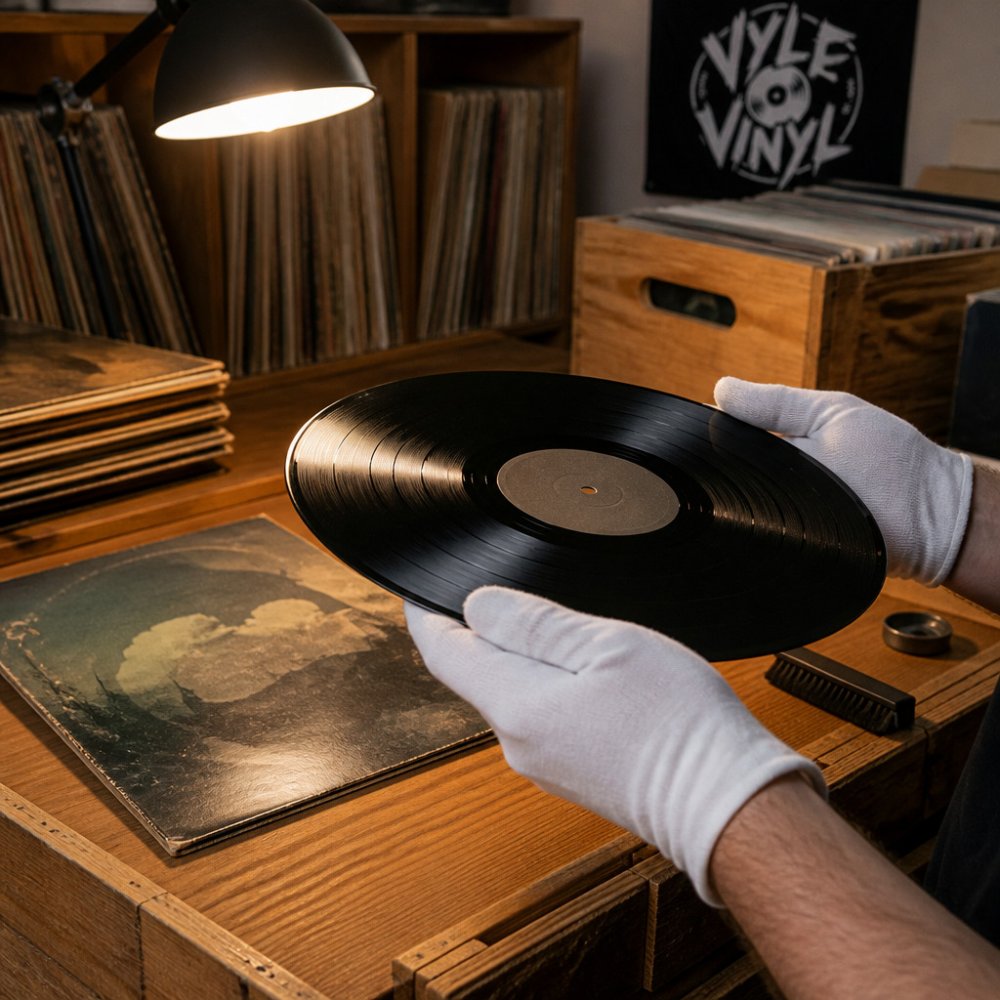
Check the record under good light and hold it at an angle. Look for scratches, warping, and haze in the grooves. Then inspect the sleeve for splits, ring wear, and seam damage.
Storing, Cleaning, and Protecting Your Classic Rock Records
Store records vertically and keep them away from direct sunlight and heat (Care, Handling, and Storage of Audio Visual Materials - Collections Care).
Keep a simple log of what you own, including purchase price and grade.
The essentials of looking after your records come down to a few simple habits:
| Care task | How to do it | Note |
|---|---|---|
| Storage position | Store records vertically | Keeps them from warping |
| Sunlight and heat | Keep away from direct sunlight and heat | Protects the vinyl and sleeve |
| Collection log | Record what you own | Include purchase price and grade |
Your Next Step: Pick Five Albums and Start Your Want List
Choose five albums from your own favorites and write them on a want list. Then browse our shop to see what is available at Vyle Vinyl.
Build the list, set a budget, and buy one record at a time.
Frequently Asked Questions
What classic rock albums should every vinyl collection have?
Start with records you enjoy. Led Zeppelin II, The Beatles' Sgt. Pepper's Lonely Hearts Club Band, The Rolling Stones' Aftermath, and AC/DC's Let There Be Rock are options to consider. Choose the ones that match the eras and sounds you already enjoy.
How do I start a classic rock vinyl collection on a budget?
Begin with a short want list of five to ten albums rather than buying randomly, and plan for a monthly budget you can sustain. Buy one or two records at a time and build the collection gradually.
Are original pressings better than reissues?
Original pressings and reissues are different editions. Look for matrix or runout markings, label variations, and catalog numbers.
How can I tell if a used vinyl record is in good condition?
Check the media first by holding the record to light and looking for scratches and warping. Then inspect the sleeve for ring wear, splits, and writing. Ask the seller about the record and sleeve condition.
Where can I find classic rock records?
Vyle Vinyl carries a curated selection, including Pink Floyd's The Dark Side of the Moon for $45.00 and Led Zeppelin II for $25.00. Keep your want list handy as you search.
How should I store and clean vinyl records?
Keep records upright, out of direct sunlight, and away from heat, which can warp vinyl. Store each record in a fresh inner sleeve inside its jacket, and use a dust brush or record cleaning solution before each play. Handle records by the edges and label to keep the grooves clean. Consistent, gentle care preserves sound quality and protects the value of a collection over time.
What should I look for when buying a used record?
Look at the condition of both the media and the sleeve, and check for scratches or warps. Ask the seller about the record's condition.
