


Finding Rare Punk Records in Florida: A Collector's Guide
Table of Contents
- Where to Hunt for Rare Punk Records
- Best Record Stores in Central Florida for Punk Vinyl
- How to Spot Original Punk Pressings
- Condition Grading for Rare Punk Records
- Local Record Store Etiquette for Collectors
- Building Relationships with Record Store Owners
- Authentication and Avoiding Bootlegs
- Frequently Asked Questions
Last Updated: September 30, 2026
Where to Hunt for Rare Punk Records
Finding rare punk records in Florida requires strategy, patience, and knowing where collectors congregate.

Start with independent record stores that specialize in punk and underground vinyl. They maintain relationships with collectors, estate sale companies, and local musicians, giving them access to rare pressings and first editions that never reach mainstream retailers.
Record fairs and swap meets are goldmines for rare vinyl. Vendors bring inventory they won't stock permanently, though bootlegs mix with legitimate pressings, so authentication skills matter. You're also surrounded by other serious collectors who understand the subculture.
Local music venues sometimes host record sales or connect you with collectors in the scene. Ask staff about upcoming events. Musicians and promoters know where rare inventory moves. They can point you toward private collections or upcoming estate sales before they hit public listings.
Online marketplaces require verification. Use Discogs for pricing and pressing identification, but always request detailed photos of the record, sleeve, and label before buying sight unseen, as condition matters enormously for rare punk records.
Best Record Stores in Central Florida for Punk Vinyl
Vyle Vinyl is a veteran-owned independent shop in Orlando specializing in horror, punk, and heavy metal vinyl alongside rare underground releases. Our curated selection means every punk record has been evaluated for authenticity and condition, so you're not sorting through thousands of mediocre records.
Our active participation in local record shows and flea markets gives us direct access to rare pressings before other retailers, so our inventory rotates with genuine hard-to-find material.

Our network with collectors, estate liquidators, and independent labels feeds our inventory with specific, curated material serious punk collectors want.
Visit us to browse in person or check our current inventory online.
How to Spot Original Punk Pressings
Original first pressings were pressed during the original release period in limited quantities. Reissues come years or decades later using the same master recordings but newly manufactured. These differences determine value.
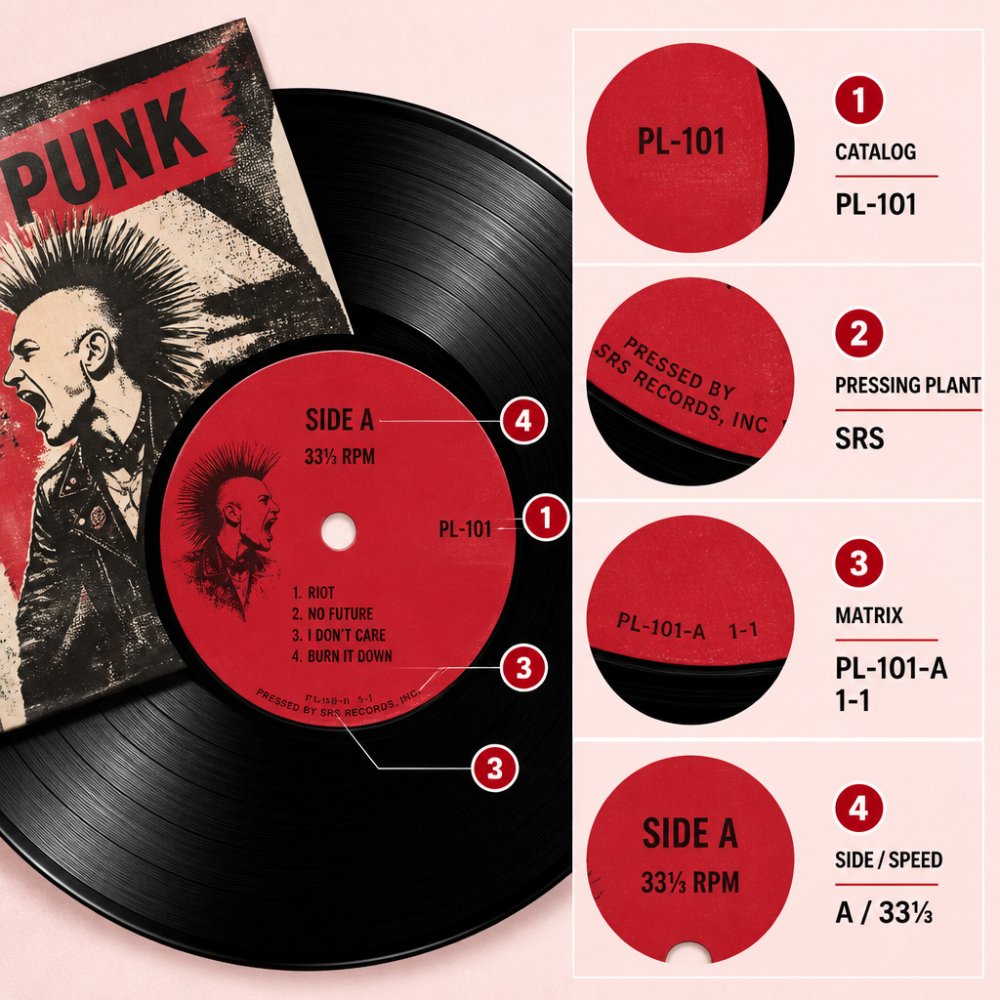
Check the label for pressing plant name and location. Knowing which plants operated during the release period helps verify authenticity. Matrix numbers stamped into the vinyl near the center label indicate when and where the record was pressed.
Different eras used different catalog number formats. Research the label's numbering convention for the specific release year to verify authenticity.
Original sleeves used different printing techniques and paper stock than modern reissues. Colors fade differently over decades. Most original sleeves show worn corners, creases, and fading from handling and storage.
Some original pressings came in specific vinyl colors. Reissues often use different colors to differentiate themselves. Know what color the original should be.
Condition Grading for Rare Punk Records
Condition grading directly impacts value. Understanding the grading scale helps you make informed purchases and know what you're paying for.
The standard grading scale ranges from Mint (M) to Poor (P).
Examine the vinyl surface under bright light for scratches, scuffs, and hairline marks indicating play history. Deep scratches that catch your fingernail indicate heavy use. The vinyl should look dark and reflective, not cloudy or discolored.
Sleeve condition is graded separately from the vinyl. Original punk sleeves took abuse from storage and handling. Look for seam splits, creases, writing, stickers, color fading, and water damage.
Original inner sleeves were thin paper that tear easily and are rarely found in good condition. Missing or damaged inner sleeves lower the overall grade. Inserts like lyrics sheets add value when present and undamaged.
Grading honesty varies between sellers. Request detailed photos from multiple angles under bright light and ask specific questions about visible damage.
| Condition Grade | Vinyl Appearance | Sleeve Condition | Playability |
|---|---|---|---|
| Mint (M) | Unplayed, pristine | Original shrink wrap | Perfect |
| Near Mint (NM) | Minimal play marks | Minimal wear | Perfect |
| Excellent (EX) | Light surface marks | Light wear visible | Perfect |
| Very Good Plus (VG+) | Obvious play wear | Noticeable creases | Perfect with minimal noise |
| Good (G) | Significant scratches | Heavy wear | Playable with surface noise |
| Fair (F) | Heavy damage visible | Severe wear | Barely playable |
Local Record Store Etiquette for Collectors
Don't monopolize staff time when other customers are waiting. Ask your most important questions, then explore the bins. Return when it's slower for deeper conversations.
Respect the organization system. Return records to their exact spot after examining them.
Debt Neglector - Dirty Water →
Handle vinyl carefully. Hold records by the edges, never touch the playing surface. Wear clean hands or cotton gloves if you have them. Oils from your skin damage vinyl over time. This matters especially when examining rare pressings you might not purchase.
Ask before haggling on price. Some stores have flexibility, others don't. Independent record stores price items based on condition, rarity, and market research.

Build relationships with store staff and owners. Tell them what you collect. Ask what's coming in soon. Regular customers get first access to new inventory. Owners remember who treats the shop with respect and who doesn't. This matters when rare records arrive.
Support the store by making purchases, even small ones. Record stores survive on volume and customer loyalty. Spending time browsing without buying occasionally is fine, but regular customers who buy build the community that keeps these shops alive.
Building Relationships with Record Store Owners
Record store owners control access to the best inventory. They know which collectors are serious, which are flaky, and which understand the subculture. Building a genuine relationship with an owner opens pathways to rare pressings you won't find on open shelves.
Start by visiting regularly and making purchases. Owners notice who comes in consistently versus who shows up once. Consistency signals that you're a real collector, not just curious. Buy records at fair prices without constant haggling.
Share your collecting focus clearly. Tell the owner what you hunt for, specific bands, labels, pressing variations, or eras. They'll start setting aside records matching your interests. Some owners call regular customers when something matching their collection profile arrives.
Engage in genuine conversation about music and vinyl culture. Ask about their own collection. Learn their story, how they got into records, why they opened the shop, what they love about the community. This transforms a transaction into a relationship. Owners who feel respected and understood become allies in your collecting journey.
Attend record shows and events where the owner participates. Seeing you in the broader collecting community reinforces that you're serious. You become part of the scene, not just a customer. That distinction matters.
Vyle Vinyl's approach to community building reflects this philosophy. Our veteran-owned shop participates actively in local record shows and flea markets, which means you see us in the real collecting community. We're not just online, we're present at the events where serious collectors gather. That presence builds relationships that benefit our customers with early access to rare pressings and curated inventory that matches what the community actually wants.
Authentication and Avoiding Bootlegs
Bootlegs are unauthorized reproductions of original records. They're manufactured without the artist's or label's permission, and they're common in the punk and underground vinyl market. Learning to spot them protects your collection and your money.
Bootlegs often have subtle printing errors on the label or sleeve. Look for misspelled band names, incorrect catalog numbers, or label artwork that doesn't match known originals. Compare the label against verified examples on Discogs or in collector forums.
The vinyl itself often reveals bootleg status. Bootleggers use cheaper pressing plants and lower-quality vinyl.
Price is a clue. If a rare record is priced dramatically below market value, ask why.
Check the pressing plant information. Legitimate original pressings have specific pressing plants. Research which plants were active during the original release period. A bootleg might list a pressing plant that didn't exist during the original release, or it might list no plant information at all.
Matrix numbers tell the story. Original pressings have consistent matrix patterns. Bootlegs often have random or inconsistent matrix numbers. The numbers should be stamped into the vinyl, not printed.
Ask the seller directly about pressing origins.
Frequently Asked Questions
What are the best record stores for punk vinyl in the region?
Vyle Vinyl in Orlando specializes in curated punk, horror, and metal vinyl and actively participates in local record shows and flea markets. Beyond local shops, crate digging at thrift stores, estate sales, and record fairs throughout Central Florida yields deep cuts and rare finds. Building relationships with shop owners and attending local music venues helps you tap into the punk community and discover inventory before it hits the shelves.
How do I identify a rare punk pressing?
Look for first pressings by checking the catalog number, pressing plant information, and label design against discographies. Original pressings often show wear consistent with their age, while bootlegs appear too clean or have printing inconsistencies. Research the release year and compare the vinyl color, sleeve artwork, and inner label details to known originals. Punk records from independent labels and small pressing runs are typically rarer than major label releases.
How can I verify the authenticity of an original 80s punk pressing?
Examine the pressing plant code on the vinyl's inner groove area and match it to the label's known pressing history. Original 80s punk records from independent labels should have period-appropriate printing quality and slight imperfections. Compare the specific catalog number and matrix numbers to online databases. Reputable record stores like Vyle Vinyl provide detailed condition grades and authentication information, reducing the risk of purchasing bootlegs or counterfeits.
What should I look for when grading used punk records?
Check the vinyl surface for scratches, warping, and dust under good lighting. Examine the sleeve for tears, water damage, and fading. Look at the label for writing, peeling, or wear. Grade both the vinyl and sleeve separately using standard grading scales. Rare punk records in lower grades may still hold value if the vinyl plays cleanly and the sleeve retains its character and authenticity.