


Finding Rare Metal Records at Flea Markets
Table of Contents
- Can You Find Rare Metal Records at Flea Markets?
- Flea Market Record Hunting Tips That Actually Work
- How to Identify Original Vinyl Pressings
- Vinyl Record Condition Grading for Beginners
- Underground Metal Records Worth Hunting For
- Negotiation and Value Assessment at the Vendor Table
- Logistics: Protecting Your Finds and Building Your Collection
- Frequently Asked Questions
Last Updated: October 7, 2026
Can You Find Rare Metal Records at Flea Markets?
Yes, you can find rare metal records at flea markets, and rare metal records flea markets are among the best hunting grounds for underground metal pressings. They're one of the best hunting grounds for underground metal pressings, obscure originals, and vinyl that never hit mainstream record stores.
Most collectors treat flea markets as a lottery: show up, dig, hope. This guide walks through the exact process to hunt rare metal records flea markets, identify their value, and negotiate fairly.
Flea Market Record Hunting Tips That Actually Work
Timing and Location Strategy
The best time to hunt is early morning, ideally within the first hour after opening. Serious collectors arrive before 9 AM; by 10 AM the best finds are picked over.
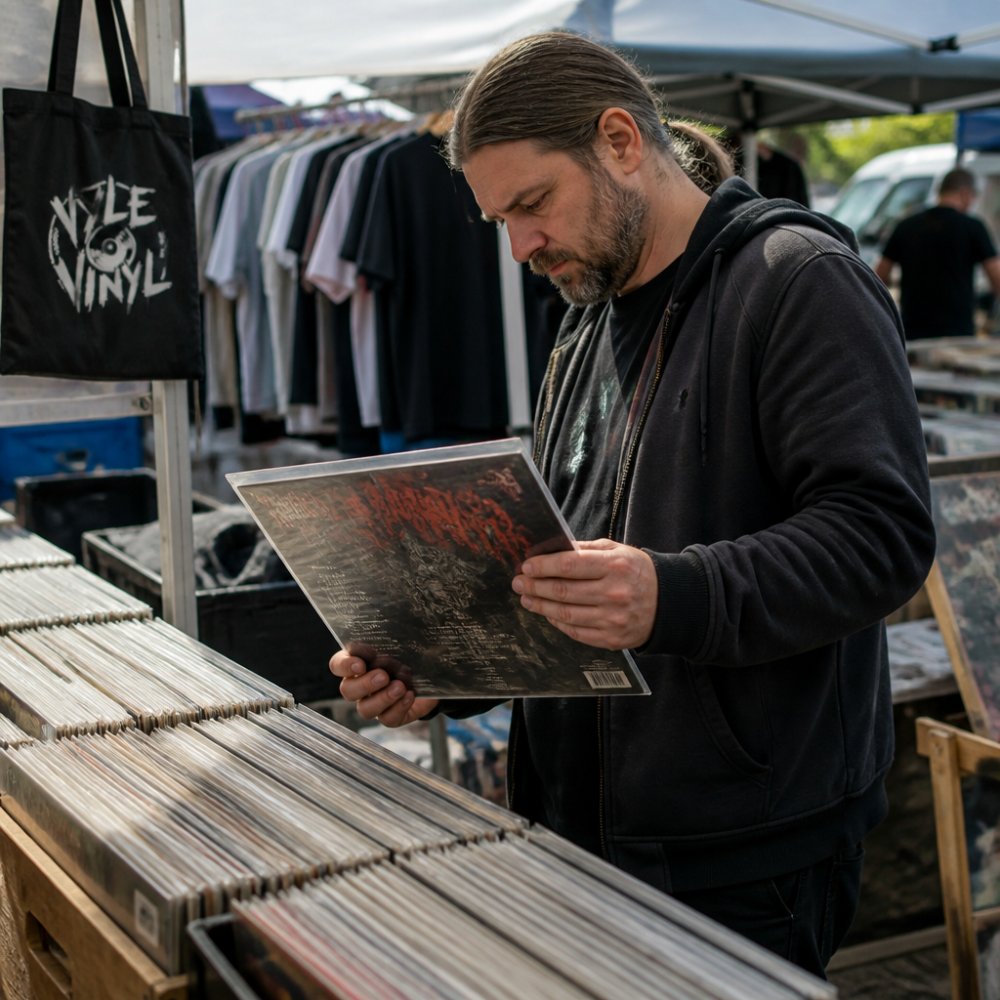
Location matters more than you'd think. Markets near older music communities, college towns, or active metal scenes consistently have better vinyl inventory.
Bring a want list, but stay flexible, the best finds are unexpected. Keep your phone charged to check discography details and pricing on the spot.
What to Bring and How to Organize Your Hunt
Pack these essentials:
- A small backpack or bag (markets get crowded; hands-free carrying protects records)
- A magnifying glass (checking matrix numbers and label details is essential)
- A price guide or phone app for quick reference
- A notebook to track vendor locations and prices
- Cash in small bills (vendors often don't take cards, and cash gives you negotiating power)
- A soft cloth or microfiber towel (inspect without leaving fingerprints)
Start at one end and work systematically rather than jumping between vendors. Hit record-specific booths first, then general vintage booths. Organize your search by focus, metal, punk, horror soundtracks, to prevent decision fatigue.
How to Identify Original Vinyl Pressings
An original pressing is the first manufactured run of an album. Originals typically sound better, hold value longer, and are what serious collectors pursue. At a flea market you have minutes, not hours, to decide, so you need a repeatable workflow that tells you in under two minutes whether a record is worth the asking price.
The Two-Minute Verification Workflow
Here is the sequence experienced hunters run at the vendor table, in order:
- Sleeve and spine first. Check the catalog number on the spine against the label. If they do not match, the sleeve and record were married from different pressings. That is a red flag and usually a price drop.
- Label design second. Compare the font, color shade, and text placement against what you know of the original. Original pressings often used a specific label layout that later reissues changed.
- Matrix number third. Tilt the record toward the light and read the runout groove with a magnifying glass. The matrix number is stamped into the vinyl in the blank space at the end of each side.
- Digital cross-check last. This is where most guides stop and where you should not.
Using Digital Verification Tools at the Vendor Table
You can do better than anecdotal experience with a phone and a few free databases.
- Discogs is the largest crowd-sourced vinyl database. Search the catalog number, filter by pressing year and country, then match the matrix string character-for-character before trusting the listing.
- The Discogs app scans barcodes, but many 1980s metal pressings predate them, type the catalog number manually.
- Popsike aggregates historical eBay sales. Use it to check whether a record actually sells at the vendor's quoted price or whether they're anchoring to an unsold listing.
- Google Lens helps you compare label artwork side by side when unsure whether a label shade is original or a reissue.
Reading Label Variations and Catalog Numbers
The label tells you almost everything. A 1986 Def Jam release of Slayer's Reign in Blood has a different catalog number than a 1990 reissue on the same label.

Original pressings often use different fonts, colors, or layouts than later reissues. Text placement, font size, and even label color shade can indicate the pressing year.
Check for pressing plant information at the bottom of the label.
Checking the Matrix Numbers and Runout Groove
The matrix number is stamped into the runout groove, the blank space at the end of each side, and is unique to each pressing. You'll need a magnifying glass to read it clearly.
Matrix numbers reveal the pressing plant and often the year. "Side A: ABC-1234-A1" indicates the first pressing of that side; "A2" or higher means a later pressing.
The runout groove itself carries visual information: originals often have slightly different groove texture and depth than reissues, subtle, but experienced collectors spot it.
When to Trust Your Eyes Over the Database
Databases are incomplete. 1980s underground metal was often pressed in runs of a few hundred copies on labels that no longer exist, so a record missing from Discogs may be rarer, not worthless. Look for physical tells: vinyl weight, sleeve printing quality, and whether the insert looks period-correct. A thin, flimsy sleeve with blurry printing is usually a bootleg; a thick, well-printed sleeve with a lyric insert is usually legitimate.
Vinyl Record Condition Grading for Beginners
Condition determines value more than rarity. A VG+ original is worth more than a Fair copy of the same album. Most beginners overpay because they can't tell a VG+ from a VG under market lighting. Here's a physical inspection routine you can run in about 60 seconds per record.
The 60-Second Inspection Routine
- Hold the record at a low angle under direct light. Deep scratches look white and feel rough with a fingernail; light scuffs look like faint hairlines and usually do not affect playback.
- Tilt the record and look for warping. Sight down the edge, if it rises and falls like a wave, it is warped. Mild warping may still play; severe warping will not.
- Check the label for spindle marks. A ring of wear around the center hole means heavy play; a clean label suggests light play.
- Run a fingertip along the edge. Cracks, chips, or a rough edge mean damage that will affect the first track.
- Inspect the sleeve separately. Seam splits, water stains, mold, writing, and price stickers all reduce value. A split seam is repairable; mold is not.
Understanding Mint, Near Mint, and VG+ Standards
Mint (M): Unplayed, still in shrink wrap. Extremely rare used, verify carefully, most flea market claims are exaggerated.
Near Mint (NM): Played very few times, minimal handling. Looks almost new; expect premium prices.
Good (G): Heavy wear, scratches visible without a light, audible pops and surface noise, but still plays through.
Fair (F) and Poor (P): Significant damage, warping, deep scratches, skips. Only valuable if the album is extremely rare.
What Beginners Get Wrong About Grading
The most common mistake is grading sleeve and record as one unit. They're graded separately, a disc can be Near Mint with a Good sleeve, or the reverse.
The second mistake is trusting the vendor's grade without verifying. Vendors grade under the same bad lighting you're standing in, so always inspect the disc yourself.
The third mistake is assuming a lower grade means a bad buy.
What to Look For on Sleeves and Inner Sleeves
Examine the jacket for water damage, mold, writing, or stickers. Split seams are common and repairable; fading and old price stickers are normal on used vinyl.
The inner sleeve matters. Original sleeves with lyrics or credits add value, and printed factory sleeves indicate an original pressing; reissues often use blank or generic sleeves. If the inner sleeve is missing entirely, value drops significantly.
Check the gatefold: it should open and close properly. Creases are normal; tears and repairs suggest heavy use.
Underground Metal Records Worth Hunting For
The metal records most worth hunting are original US pressings from the 1980s and early 1990s, pressed in small quantities and now often rare.
Look for first pressings on Metal Blade, Roadrunner, Megaforce, and Def Jam. Metallica's Kill 'Em All (1983, Megaforce), Slayer's Reign in Blood (1986, Def Jam), and Hirax's Raging Violence (1984, Metal Blade) are consistently valuable, a VG+ original Kill 'Em All can command $300 or more.

Smaller-label releases are often overlooked at flea markets, which is where the deals are. Riot's Restless Breed (1982, Electra) is a solid heavy metal record collectors want but don't always recognize.
Look for records with original inserts, factory inner sleeves, and complete packaging, a complete copy is worth significantly more than one missing the inner sleeve or insert.
Negotiation and Value Assessment at the Vendor Table
Vendors expect negotiation, so don't pay sticker unless it's already fair. Start by asking how long they've had the record, whether they test-played it, and whether they know the pressing year.
Check condition together: ask if they've played it and look at the grooves under light.
Compare prices mentally to online rates, but don't mention it. Ask for their bottom line, many vendors drop 10-20% off sticker for serious buyers purchasing multiple records.
Logistics: Protecting Your Finds and Building Your Collection
Transport records carefully. Vinyl is durable, but impact and heat damage it.
Store records upright, not stacked flat, in a cool, dry place away from direct sunlight.
Replace the acidic paper sleeves records come in with archival-quality inner sleeves, a small investment that protects your collection over time.
Keep detailed records of what you own, pressing, condition grade, and price paid, to understand your collection's value and avoid duplicates.
Finding rare metal records at flea markets takes patience, knowledge, and strategy: original pressings, good condition, fair prices.
Frequently Asked Questions
How do you spot rare metal records while crate digging at flea markets?
Look for original pressings by checking the label, catalog number, and matrix numbers in the runout groove. Early pressings of classic metal albums like Slayer's Reign in Blood or Metallica's Kill 'Em All command higher value. Cross-reference artist discographies and pressing plant information to confirm rarity. Condition matters, even a rare find loses value if it's heavily played. Examine the gatefold and inner sleeve for completeness, as original packaging significantly impacts collectibility.
What should you check before buying a used metal record at a flea market?
Inspect the vinyl itself for scratches, warping, and visible damage under good lighting. Check the sleeve and gatefold for tears, water damage, or writing. Play-test if possible, or ask the vendor about the condition. Verify the pressing by examining the label and matrix numbers, first pressings are typically worth more. Ask about the record's history and storage conditions. A VG+ record in excellent condition is a safer investment than a rare pressing that's heavily worn.
Can you really find rare metal records at flea markets, or is it just luck?
Yes, rare metal records are absolutely findable at flea markets, though it requires strategy over pure luck. Timing matters, arriving early gives you first pick before other collectors. Knowing what to look for, original pressings, label variations, and catalog numbers, helps you spot value others miss. Building relationships with regular vendors improves your odds. Many flea market sellers don't specialize in vinyl and underprice rare finds. Consistency and patience pay off; many serious collectors find their best pieces through persistent hunting at local markets.
What makes a metal record valuable at a flea market?
First pressings of classic albums command premium prices, especially on original labels like Def Jam or Megaforce. Condition is critical, mint and near mint records sell for significantly more than worn copies. Limited editions, colored vinyl variants, and albums with original gatefolds add value. Underground releases and cult classics appeal to dedicated metal collectors. Provenance matters too, records with complete original packaging and minimal play history fetch higher prices. Rarity combined with condition and completeness creates real collector value.