


Buy Rare Metal Records Online Safely: A Collector's Guide
Table of Contents
- Why Buying Rare Metal Records Online Requires Strategy
- Step 1: Verify the Seller Before You Commit
- Step 2: How to Identify Vinyl Pressings and Authenticate Listings
- Step 3: Vinyl Record Grading Guide for Online Purchases
- Step 4: Assess Price and Avoid Overpaying
- Step 5: Secure Payment and Buyer Protection
- Step 6: Vinyl Record Shipping and Packaging Standards
- Common Mistakes Collectors Make When Buying Rare Metal Records Online
- Frequently Asked Questions
Last Updated: October 20, 2026
Why Buying Rare Metal Records Online Requires Strategy
Learning how to buy rare metal records online safely demands more than just clicking "add to cart." You're navigating a marketplace where pressing variants matter, seller reputation shapes your experience, and a single wrong move can leave you with a counterfeit or misgraded album.
The good news: a structured approach eliminates most of that risk.
This guide teaches you how to buy rare metal records online safely, walking you through vetting sellers, understanding pressing details, grading records accurately, and securing your purchase with buyer protection. By the end, you'll know exactly what separates a safe transaction from a risky one.
Better Business Bureau's guide to online shopping safety
Step 1: Verify the Seller Before You Commit
Your first job is determining whether the seller is trustworthy. This step alone prevents the majority of problems.
Check seller feedback and dispute history
Start by examining the seller's feedback score and transaction history. On platforms like Discogs or eBay, look at the percentage of positive feedback, anything below 98% warrants caution. Read the actual feedback comments, not just the score. Look for patterns: Are buyers complaining about condition misrepresentation? Slow shipping? Poor communication?
Check dispute and return rates. A seller with 500 sales and zero disputes is different from one with 500 sales and 15 disputes. Most platforms show this data directly. If it's hidden or unavailable, move on.
Examine how the seller responds to negative feedback. Do they address concerns professionally, or do they get defensive? A seller who acknowledges mistakes and explains improvements is lower risk than one who ignores criticism.
Red flags that signal a risky seller
Certain patterns are deal-breakers. A newly created account with high-value listings is suspicious, scammers often start fresh accounts and disappear after a few large sales.
Vague or generic descriptions are a warning sign. Legitimate sellers of rare metal records provide specific pressing information: label details, matrix numbers, catalog numbers, and condition notes.
Photos that are blurry, poorly lit, or don't show the label clearly indicate low effort. Honest sellers know that clear photos build trust and reduce disputes.
Prices that seem too good to be true usually are.
Step 2: How to Identify Vinyl Pressings and Authenticate Listings
Understanding pressing details is how you confirm you're buying what the seller claims. A first pressing of a classic metal record can be worth ten times as much as a later reissue.
What to look for in listing photos
Demand clear, well-lit photos of both the front and back cover, the label on both sides, and the record surface itself. A 1986 first pressing of Slayer's Reign in Blood on Def Jam Records, for example, will show specific label design and printing details that later pressings don't have.

Check the spine and back cover for wear patterns consistent with the claimed condition. A "mint" record shouldn't show visible seam splits or ring wear on the jacket. If the photos don't match the condition description, ask why before committing.
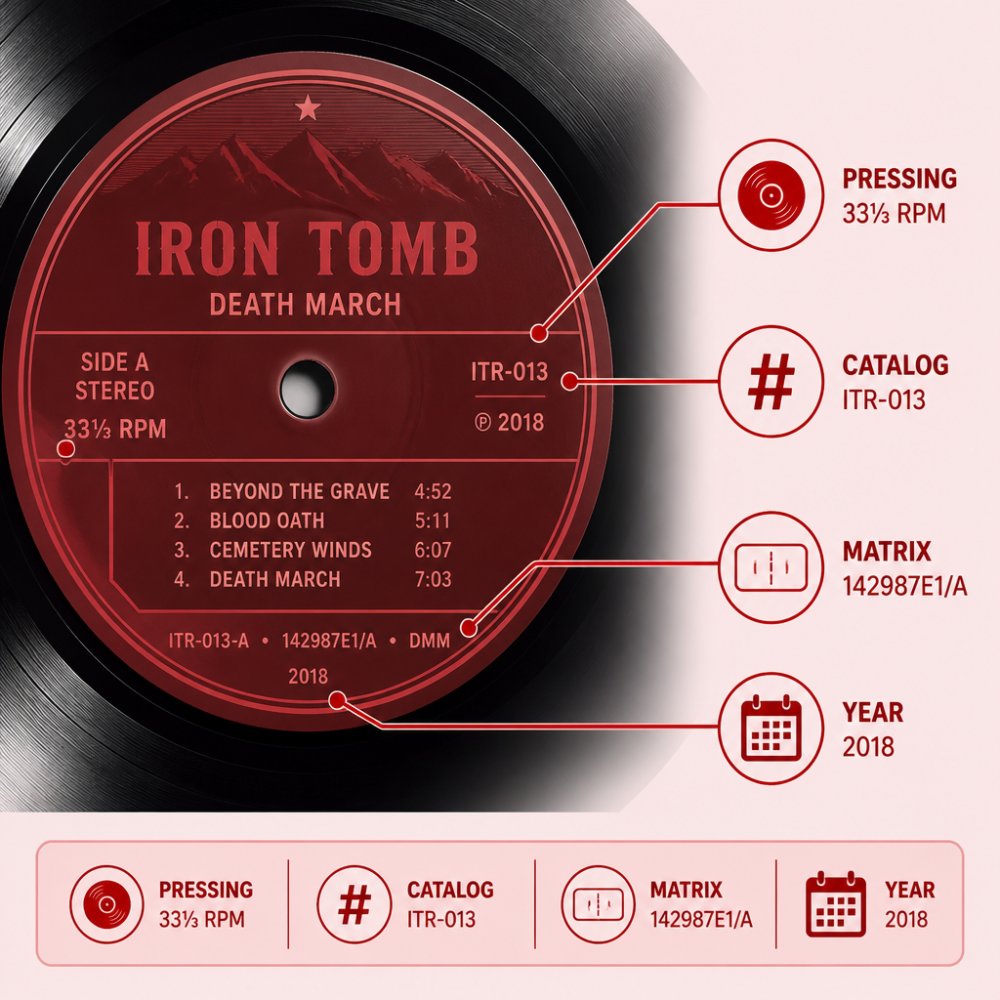
Request photos of the matrix runout, the area near the center hole on the vinyl itself. This is where pressing plants stamped identifying information. Experienced collectors use matrix numbers to confirm pressing details and detect counterfeits. If a seller refuses to provide these photos, that's a red flag.
Pressing details that matter for rare metal records
Learn to read label variations. Early pressings often have different label designs, typography, or printing methods than later versions. For rare metal records, these differences can mean hundreds of dollars in value.
Understand reissue markers. Later pressings might say "reissue" or "remastered" on the label. Barcode placement changed over time, early pressings often lack barcodes entirely. If the seller claims a first pressing but the label shows a barcode in a location that wasn't used until 1990, something's wrong.
Check for import versus domestic pressings. A Japanese import of an album might be genuine but worth less than a first domestic pressing. The seller should specify this clearly. Vyle Vinyl's collection includes both.
Step 3: Vinyl Record Grading Guide for Online Purchases
Condition grading is standardized but subjective. Understanding the scale protects you from overpaying for damaged records or rejecting ones that are actually in the condition promised.
Understanding condition grades from Mint to Poor
Mint (M): The record has never been played and the jacket shows no wear. This is rare and expensive. Most "mint" listings are actually Near Mint.
Near Mint (NM or M-): Played fewer than five times.
Very Good Plus (VG+): The record has been played regularly but well-maintained.
Very Good (VG): Clear signs of regular play. Surface noise is noticeable but not overwhelming.
Good Plus (G+): Heavy play. Surface noise is constant but the record still plays through. The jacket is heavily worn, possibly with significant seam splits or tears.
Good (G) and below: Not recommended for rare metal records. These copies are heavily damaged, skip tracks, or have major surface noise.
How to spot grading inconsistencies in listings
A seller who claims VG+ condition but the photos show visible scratches or a heavily creased jacket is either being generous or dishonest. Compare the photos against the grading definitions above. If the visual evidence doesn't match the grade, negotiate or walk away.
Watch for sellers who grade the record and jacket separately. A record might be VG+ but the jacket VG. The seller should state both. If they only mention one, ask for clarification before buying.
Inconsistencies between the description and photos are common red flags. A seller might write "minimal surface noise" but the photos show obvious scratches. Trust the photos over the words, they don't lie the way descriptions can.
Step 4: Assess Price and Avoid Overpaying
Rare metal records command premium prices, but there's a difference between fair market value and exploitation. Research before you buy.
Use Discogs price history to see what similar pressings have sold for recently. A first pressing of Iron Maiden's Somewhere in Time in VG+ condition should cost roughly the same whether you're buying from a seller in Ohio or California, adjusted for shipping.

Check multiple listings for the same record. If one seller is asking significantly more than others for the same pressing and condition, there's likely a reason, or there isn't one, and you should buy elsewhere.
Factor in shipping costs and seller location. International shipping adds time and risk. A record from overseas might arrive damaged or take weeks to reach you. A domestic sale is often worth a small premium for reliability.
Understand that rarity commands price. A limited-run pressing from an underground metal label will cost more than a major-label release, and that's legitimate.
Discogs marketplace pricing guide
Step 5: Secure Payment and Buyer Protection
How you pay matters as much as what you buy. Use payment methods that offer buyer protection.
Credit cards and PayPal provide dispute resolution if the record arrives damaged or doesn't match the listing. Wire transfers and cryptocurrency don't.
Use platform-integrated payment systems when possible. Buying through eBay's or Discogs's payment system means the platform holds funds until you confirm receipt.
Document everything. Take screenshots of the listing, the photos, the condition description, and the seller's responses. If a dispute arises, you'll have proof of what was promised versus what arrived.
Never send money outside the platform. Sellers who ask you to pay via email or external payment are circumventing the protections that exist to help you.
Step 6: Vinyl Record Shipping and Packaging Standards
How a record is packaged determines whether it arrives in the condition promised. Poor shipping ruins records and creates disputes.
What proper packaging looks like
The record should be wrapped in acid-free paper or a protective sleeve, never plastic wrap directly against the vinyl. Plastic traps moisture and can stick to the record surface over time.
The record goes into a sturdy inner mailer, typically a padded record mailer or a box with at least two inches of padding on all sides.
For valuable records, double-boxing is standard. The inner box (with the record) goes into a larger outer box with padding between them. This protects against crushing if the outer box gets dropped or stacked.
Include a packing slip inside the inner mailer so the record is identified if the outer box is damaged and opened by postal workers.
International import risks and handling
Shipping rare metal records internationally adds complexity. Customs delays are common and can expose records to temperature and humidity fluctuations. Sellers outside the US should use climate-controlled shipping when possible.
Check import regulations for your destination country. Some regions have restrictions on certain materials or require customs documentation. Delays can stretch shipping times from weeks to months.
Request tracking and signature confirmation for international shipments. This protects both you and the seller by creating a clear handoff point. If a record goes missing, tracking data determines liability.
Budget extra time for international orders. A record that takes two weeks to arrive domestically might take four to six weeks from overseas. Plan accordingly if you need it by a specific date.
Common Mistakes Collectors Make When Buying Rare Metal Records Online
Rushing the purchase is the biggest mistake.
Ignoring the jacket condition. Some collectors only care about the record itself.
Trusting seller descriptions over photos. A seller might claim VG+ condition, but if the photos show obvious damage, the photos are the truth.
Buying from sellers with no metal record history.
Not asking questions before buying. If anything about the listing is unclear, ask. Legitimate sellers answer questions quickly and thoroughly.
Skipping the dispute resolution process. If a record arrives damaged or misrepresented, open a dispute immediately. Platforms like Discogs and eBay take buyer protection seriously.
Buying rare metal records online safely requires vigilance, but it's absolutely doable.
At Vyle Vinyl, we've built our reputation on honest grading, clear descriptions, and careful packaging. When you buy from us, you're getting records we've personally authenticated, graded fairly, and packed to arrive in the condition promised. Consumer Reports guide to online transaction safety If you're ready to add to your collection with confidence, start by browsing our curated selection of rare metal pressings.
Frequently Asked Questions
How can you tell if a rare metal record listing is authentic?
Check the seller's feedback history and dispute resolution rate first. Examine listing photos closely for pressing details like label text, matrix numbers, and cover wear patterns. Compare the pressing information against discographies on Discogs to verify the release matches the description. Ask the seller for additional photos of specific details if anything seems unclear. Authentic sellers respond quickly with detailed information and accept reasonable questions about condition or pressing variants.
What should you check before buying a rare vinyl record online?
Verify the seller's reputation through feedback and reviews. Assess the condition grade against photos and look for damage, warping, or sleeve wear. Confirm the pressing variant matches what you're seeking (first pressing, reissue, limited edition). Check the asking price against recent sold listings to avoid overpaying. Review the shipping method and packaging details. Use payment methods that offer buyer protection, such as credit cards or PayPal Goods & Services. Request clarification on anything unclear before completing the purchase.
What are the warning signs of a risky record seller?
Avoid sellers with low feedback scores, multiple unresolved disputes, or complaints about condition misrepresentation. Red flags include vague listings without pressing information, photos taken in poor lighting, refusal to answer questions, or unrealistic pricing. Be cautious if a seller won't specify the condition grade or pressing variant. Sellers who rush you to buy quickly or pressure you to use unprotected payment methods are problematic. Legitimate sellers provide detailed condition assessments, multiple clear photos, and responsive communication.
How do you verify a metal record pressing?
Look at the label information in listing photos: check the catalog number, release year, and label name against official discographies. Examine matrix numbers etched into the vinyl runout area. Compare pressing variants (first US press, reissue, limited edition) to confirm you're buying what you want. For rare metal records, first pressings often command higher prices. Request additional photos of the label and runout area if the listing photos don't show these details clearly. Cross-reference pressing information with collector databases to confirm authenticity and value.